
Why guessing pipe problems leads to expensive mistakes
Many pipe failures do not start as emergencies. They start quietly. A slow backup. A smell that comes and goes. A section of pipe that works fine most days and fails under heavy use. Property managers, HOAs, and municipalities often face pressure to act fast. Tenants want answers. Residents want fixes. City systems cannot afford repeat failures.
The problem is that guessing leads to the wrong repair.
Digging without knowing the condition of the pipe almost always costs more. It can damage landscaping, roads, slabs, or interior finishes. And it may not even solve the real issue. A sewer camera inspection removes the guesswork. It shows what is happening inside the pipe before any repair decision is made.
That single step often changes the entire plan.
What a sewer camera inspection actually is
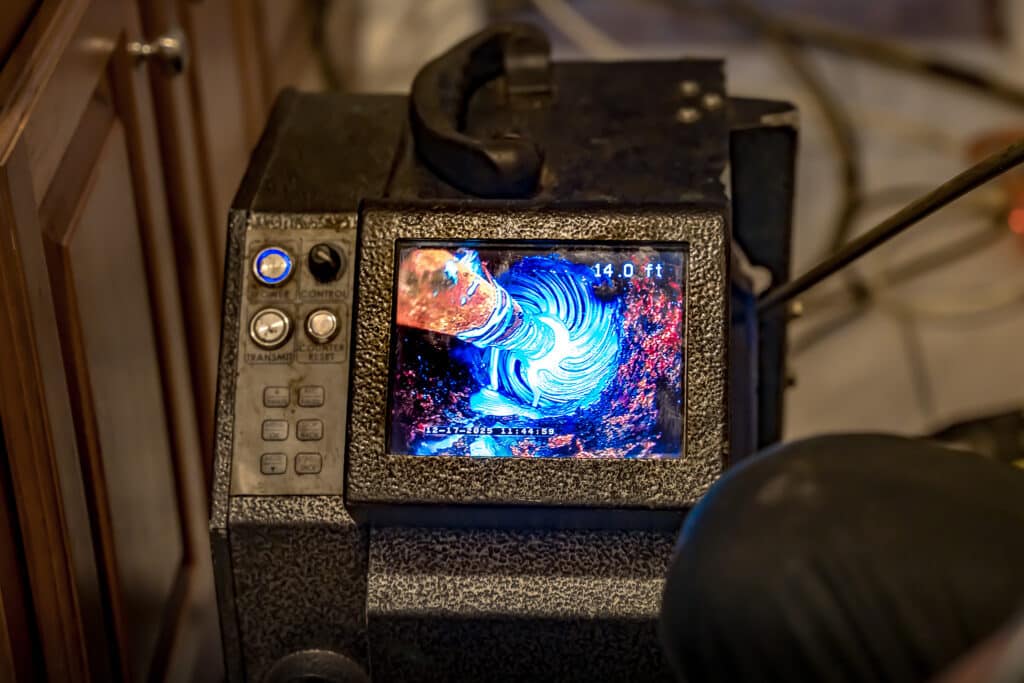
A sewer camera inspection uses a high-resolution camera mounted on a flexible cable. The camera is inserted into the pipe through an existing access point. As the camera moves through the line, it sends live video to a monitor. That video is recorded and reviewed. This process is non-invasive. No digging. No demolition. No disruption to daily operations.
Pipeflow Solutions offers this service through its video inspection services, often as the first step in diagnosing sewer and drain issues.
What the camera can see inside the pipe
The camera does not just confirm that a problem exists. It shows why the problem exists.
During a sewer camera inspection, technicians can identify:
- Cracks and fractures in the pipe wall
- Corrosion common in aging cast iron systems
- Root intrusion entering through joints or cracks
- Offsets where pipe sections no longer align
- Bellies or low spots that collect waste and water
- Grease buildup and hardened debris
- Signs of past repairs that are failing
This level of detail matters. A backup caused by grease buildup requires a very different solution than a backup caused by structural collapse.
Why this matters for large properties and shared systems
In single-family homes, a sewer issue affects one household. In large properties, the impact multiplies fast.
A commercial building may house dozens of tenants. An HOA may manage hundreds of units. A municipal line may serve entire neighborhoods.
Without a camera inspection, repairs are often based on assumptions. Those assumptions can shut down sections of a building or street unnecessarily.
Camera inspections allow decisions to be made with evidence, not pressure.
Common problems found during inspections of aging systems
Many inspections reveal issues tied to age, not misuse.
Older properties, especially those built with cast iron pipe, show predictable patterns of failure.
Internal corrosion
Cast iron corrodes from the inside out. Over time, the pipe wall thins and flakes. Waste catches on rough surfaces, leading to recurring clogs.
Joint separation
As buildings settle, pipe joints can shift. Even small separations allow roots and debris to enter the system.
Hidden structural damage
Pipes buried under slabs or roads can crack without visible surface signs. A camera inspection often finds damage long before a collapse occurs.
How inspection results guide repair decisions
This is where inspections change everything.
Once the condition of the pipe is known, the repair approach becomes clearer.
In many cases, full excavation is not needed.
When trenchless pipe repair is the right next step
If the camera shows structural damage but the pipe still holds its shape, trenchless repair may be an option.
Trenchless methods allow a new pipe liner to be installed inside the existing pipe. This creates a smooth, sealed interior without digging.
Pipeflow Solutions provides this service through its trenchless pipe repair solutions, often following a camera inspection.
This approach is commonly used in:
- Multi-unit residential buildings
- Commercial properties with limited access
- Municipal lines under roads or sidewalks
The inspection confirms whether the pipe is a candidate for lining or if excavation is unavoidable.
When coating may be enough and when it is not
In some cases, the pipe structure is intact, but the interior surface shows corrosion or minor defects.
Spray or brush coating may be considered in these situations. The inspection helps determine if coating will extend the pipe’s life or if it would only delay a larger repair.
This distinction matters. Applying a coating to a pipe that is already failing structurally will not solve the problem.
The camera inspection makes that clear.
Why inspections reduce long-term costs
Camera inspections often feel like an extra step. In reality, they prevent unnecessary spending.
They help avoid:
- Excavation that was not needed
- Temporary fixes that fail quickly
- Repeat disruptions to tenants or residents
- Emergency repairs caused by missed warning signs
For municipalities, inspections also support planning. Knowing which sections of pipe are degrading allows repairs to be scheduled before failures occur.
When a camera inspection should be scheduled
Inspections are not only for emergencies.
They are often scheduled:
- Before purchasing or renovating a property
- After repeated backups or slow drains
- When planning long-term infrastructure upgrades
- As part of routine maintenance for older systems
In shared systems, waiting for failure usually costs more than acting early.
Why inspection-first thinking leads to better outcomes
The most effective sewer repairs start with information.
A sewer camera inspection provides that information without disruption. It shows the real condition of the system and narrows the repair options to what will actually work.
For property managers, it supports informed decisions.
For HOAs, it reduces resident impact.
For municipalities, it protects public infrastructure.
And for everyone involved, it replaces guessing with clarity.