
Why coating gets misunderstood so often
Pipe spray and brush coating is often treated like a shortcut. That misunderstanding causes problems. Coating is not a fix for every failing pipe, and it was never meant to be. When used correctly, it can extend the life of a system and delay costly replacement. When used in the wrong conditions, it becomes a temporary patch that fails quietly until the problem becomes unavoidable.
The reason coating is misunderstood is simple. Many people hear that it avoids digging and assume it can replace structural repairs. That assumption skips the most important step, which is understanding the actual condition of the pipe.
What pipe spray and brush coating actually is
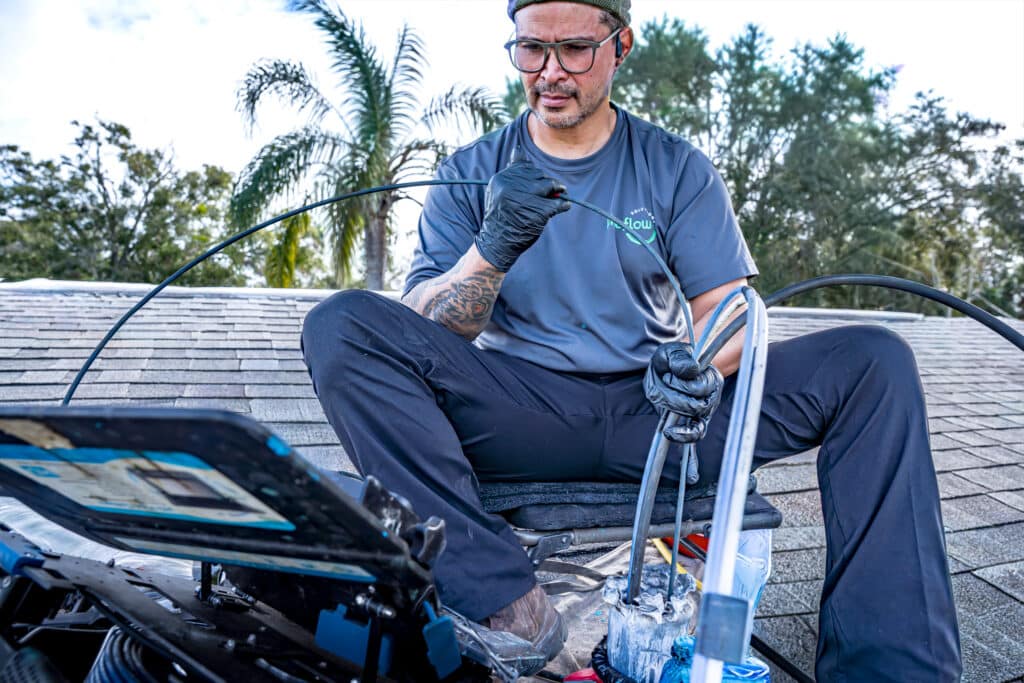
Pipe coating is a rehabilitation method that applies a protective layer to the inside of an existing pipe. The coating is sprayed or brushed onto the pipe wall after cleaning and preparation. Once cured, it forms a smooth interior surface that protects against corrosion and minor surface defects.
Pipeflow Solutions provides this service through its pipe spray and brush coating rehabilitation process, often as part of a broader evaluation of system health.
This method does not replace the pipe. It reinforces and protects what is already there.
What coating can and cannot do
Coating works within limits. Understanding those limits is what separates effective repairs from expensive delays.
What coating can address
Coating performs well when the pipe is structurally intact but showing signs of surface wear. Common use cases include corrosion inside cast iron pipes, minor surface pitting, and early-stage deterioration that has not compromised alignment or load-bearing strength.
In these situations, coating can restore flow efficiency and protect the pipe wall from further degradation. It also creates a smoother interior surface, which helps reduce buildup in systems that experience heavy use.
What coating cannot fix
Coating cannot correct structural failure. It does not realign shifted pipe sections. It does not bridge collapsed areas. It does not restore strength to pipe walls that have thinned beyond safe limits.
Applying coating in those conditions hides the problem instead of solving it. The pipe may appear improved temporarily, but the underlying failure continues.
Why inspections matter before any coating decision
This is where many coating projects succeed or fail.
Before coating is considered, the pipe must be inspected internally. A camera inspection shows whether the pipe still holds its shape, whether joints are intact, and whether corrosion is cosmetic or structural.
Pipeflow Solutions uses video inspections to confirm whether coating is appropriate or if a different approach is required.
Skipping this step leads to decisions based on access or budget rather than condition. That almost always backfires.
Common scenarios where coating makes sense
Coating is often used as part of a maintenance or life-extension plan rather than an emergency repair.
It is commonly considered when a system shows early corrosion but no cracking, when full lining would be excessive for the condition observed, or when a property owner wants to stabilize a system while planning future upgrades.
In large properties, coating may also be used in vertical stacks or sections that are difficult to access for excavation but do not show structural failure.
Situations where coating is the wrong choice
There are times when coating should be ruled out quickly.
If a camera inspection reveals severe corrosion, missing pipe wall sections, joint separation, or deformation, coating will not solve the problem. In these cases, trenchless repair or replacement is usually the correct path.
Pipeflow Solutions often transitions from inspection directly to trenchless pipe repair when coating would only delay a necessary structural fix.
How coating fits into long-term system planning
For municipalities and property managers, not every pipe can be replaced at once. Coating can play a role in managing that reality.
By stabilizing sections of pipe that are still structurally sound, coating allows resources to be focused on higher-risk areas. This supports phased rehabilitation rather than reactive repair.
The key is honesty about what coating is being asked to do. When it is used as protection, it performs well. When it is used as a rescue, it does not.
Why coating decisions should never be rushed
Coating is often chosen because it appears faster or less disruptive. That can be true, but speed should not drive the decision.
A rushed coating project often skips preparation, inspection, or proper curing. Each shortcut reduces lifespan and reliability. In shared systems, that risk multiplies.
A slower evaluation process usually leads to fewer repairs later.
Choosing the right repair based on condition, not convenience
Every sewer system tells a story once you look inside it. Some pipes need protection. Some need reinforcement. Some need replacement.
Pipe spray and brush coating works best when it matches the condition of the pipe rather than the preference of the schedule.
Camera inspections provide the clarity needed to make that call. From there, coating, lining, or replacement can be selected for the right reasons and applied where it will actually hold.
That approach reduces surprises and keeps systems functioning longer without unnecessary disruption.